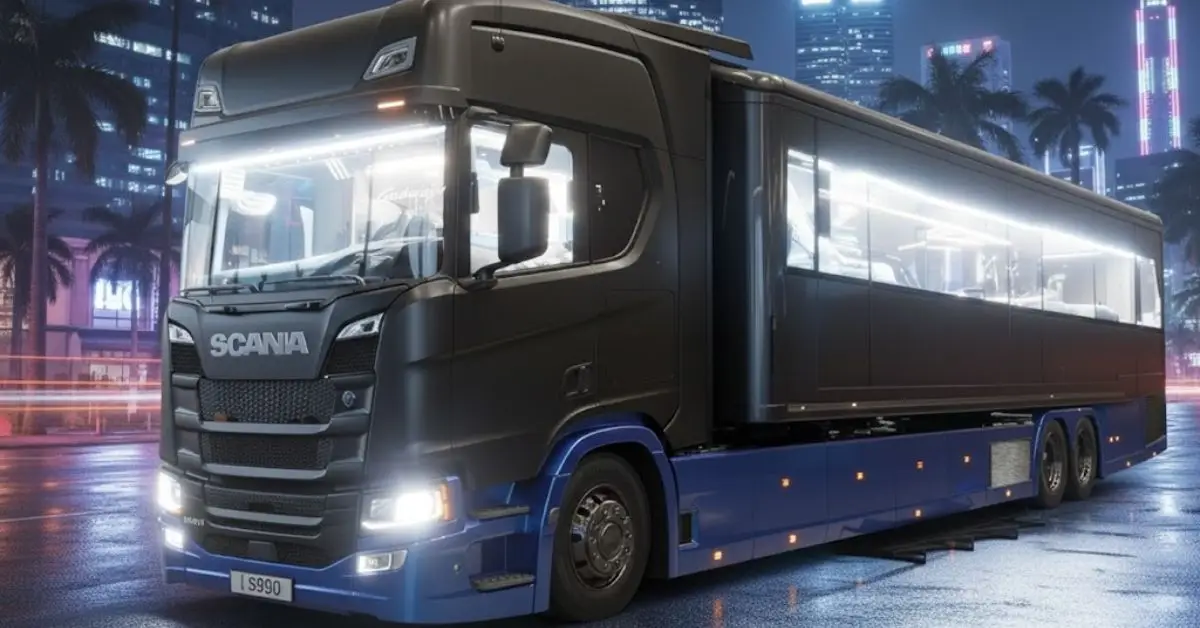
The Big Moment: Why the 2026 Scania R1000 Truck Has Everyone Talking
The 2026 Scania R1000 Truck Unveiled world doesn’t usually do “viral moments.” Most of the time, heavy-duty machines earn respect quietly, mile after mile, job after job. But once in a while, a name hits the internet like a thunderclap and suddenly even car guys are leaning in. That’s exactly what’s happening with the Scania R1000 Truck.
| Key Details | 2026 Scania R1000 Truck |
|---|---|
| Type | Heavy-duty long-haul flagship concept-style truck |
| Power theme | “1,000 HP” headline performance (unofficial / vision spec) |
| Core focus | Extreme pulling power, high-speed stability, premium sleeper comfort |
| Cabin vibe | Driver-first cockpit with a futuristic, luxury-lounge feel |
| Best use-case | Heavy transport, long-distance routes, showcase builds |
The idea is simple and completely wild: take the proud, long-haul Scania DNA and push it into “supertruck” territory—massive power, huge presence, and a cabin that looks like it belongs in the future. Whether you treat the Scania R1000 Truck as a rumored halo project, a design vision, or the kind of thing brands build to show what’s possible, one thing is clear: the imagination behind it is what makes it irresistible.
What “R1000” Really Means in 2026
The “R” name carries weight. It’s the letter associated with Scania’s premium long-haul vibe: big cab comfort, strong road manners, and that confident front-end look that drivers recognize from a distance. The “1000” part is the headline—pure power fantasy, the idea of a benchmark-breaking machine that sits above everything else.
So when people say Scania R1000 Truck, they’re talking about a flagship concept-level truck that aims to be the peak of performance, presence, and prestige. It’s not about replacing your regular fleet workhorse. It’s about creating a poster truck for the modern era—something that makes drivers proud and competitors nervous.
Exterior Design: A Truck That Looks Fast Even Standing Still
The first thing you notice about the Scania R1000 Truck is how aggressive and clean it looks at the same time. It doesn’t feel like a truck that got “extra stuff” added. It feels like a truck that was shaped by the wind, then sharpened by someone with taste.
The face is typically imagined with a stronger, wider grille area and a meaner lighting signature. That lighting matters, because modern truck design is moving the same way cars moved years ago—LEDs that aren’t just bright, but recognizable. The Scania R1000 Truck look leans into that: a bold front identity that reads instantly at night.
From the side, you get that long-haul stance—tall cab, confident shoulders, and an overall shape that looks engineered rather than decorated. And because the “R1000” idea is all about power and stability, the design often emphasizes width and posture. It looks planted. It looks ready.
At the rear, the vibe is usually functional muscle: tidy surfaces, strong lines, and aero elements that aren’t there to look sporty—they’re there because a big, fast, heavy truck needs the air to cooperate.
Aerodynamics: The Secret Sauce Behind the “Beast” Reputation
Here’s a truth nobody can escape in 2026: power is fun, but efficiency is the boss. The Scania R1000 Truck concept idea makes sense only if the shape helps the drivetrain do its job without wasting energy.
That’s why the “unveiled” styling narrative typically includes smoother edges, tighter panel lines, smarter airflow around mirrors, and a body that looks more sculpted than the old-school square trucks. The goal is simple: reduce drag, improve stability, cut fatigue, and keep the truck calm at speed.
If you want a 1,000 HP headline, you also want a truck that doesn’t feel like it’s fighting the wind every second.
Cabin: A Sleeper That Feels Like a High-End Lounge
The cabin is where the Scania R1000 Truck really sells its fantasy. Because if you’re building a halo truck, it can’t just be powerful—it has to feel special for the person living inside it.
The “futuristic” cabin image usually means a driver-focused dashboard, a wide digital display setup, and a cockpit that feels more like a modern aircraft than a traditional truck. But the best part isn’t the screens. The best part is the mood: calm lighting, premium materials, smart storage, and comfort that makes long routes feel less like survival and more like a professional lifestyle.
In a long-haul world, the sleeper is everything. And the Scania R1000 Truck concept typically imagines a sleeper that’s properly premium: better mattress comfort, clever climate control, quieter insulation, and small “luxury touches” that actually matter at 2 AM at a truck stop.
This is the kind of truck where the driver doesn’t just sit. The driver belongs.
Driver Position and Visibility: Built for Real Work, Not Just Show
Even in the wildest “supertruck” ideas, the basics still matter. The Scania R1000 Truck has to feel commanding from the seat. That means strong forward visibility, smart mirror and camera integration, and a driving position that’s comfortable for long hours.
A truck can have a thousand horsepower, but if the cabin ergonomics are annoying, drivers will hate it. The whole point of the Scania R1000 Truck vibe is that it’s high-performance without being high-stress.
Tech and Infotainment: Modern, Fast, and Fleet-Friendly
If the Scania R1000 Truck is meant to represent a “2026 benchmark,” then it needs tech that feels current, not clunky. That means smoother infotainment response, better navigation designed for heavy vehicles, and cabin controls that don’t require ten taps to do something basic.
It also means fleet intelligence. In 2026, the smartest trucks aren’t just machines. They’re connected tools—telematics, diagnostics, route optimization, predictive maintenance, and driver coaching systems that help save fuel and reduce downtime.
The Scania R1000 Truck concept narrative fits perfectly with that world: a beast that’s also brainy.
Powertrain: The 1,000 HP Headline and the Reality Behind It
Now we come to the star of the show: the “1,000 HP” claim.
In the real heavy-truck world, manufacturers focus heavily on reliability, emissions compliance, and total cost of ownership. So when the Scania R1000 Truck is talked about as a 1,000 HP monster, most people interpret it as a halo idea: either a special build, a concept, a future-looking technology showcase, or a design exercise that imagines what could happen if commercial trucking borrowed some supercar attitude.
But here’s the important part: the 1,000 HP headline isn’t only about top-end speed. In trucks, the story is torque. A power benchmark only matters if the torque curve is strong, usable, and designed for pulling serious weight without constant strain.
So the “R1000” idea usually implies a drivetrain tuned for brutal low-end shove, confident climbing power, and stable highway performance under heavy load. The Scania R1000 Truck vibe is about effortless strength, not nervous aggression.
Transmission and Drivability: Smooth Power Is the Real Luxury
A truck can be powerful and still be annoying. The Scania R1000 Truck concept works only if the drivetrain feels smooth—smart shifting, predictable response, and a calm driving character even when the load is heavy.
That’s why the “benchmark” narrative often pairs the big power with intelligent automation. Not “self-driving fantasy,” but real-world assistance that reduces fatigue: smoother shifting logic, adaptive cruise behavior that feels natural, and braking systems that keep downhill driving controlled.
In short, the Scania R1000 Truck should feel like it’s doing the hard work quietly in the background.
Ride and Handling: High Power Needs High Control
With huge power comes a responsibility: control. The Scania R1000 Truck concept is typically imagined with advanced suspension tuning, better stability at speed, and a planted feel that keeps the truck confident in crosswinds.
Long-haul drivers don’t want a truck that feels nervous. They want a truck that feels unshakeable. So the “beast” image of the Scania R1000 Truck isn’t just about acceleration—it’s about stability, braking confidence, and steering that feels precise for something this big.
Braking: The Part People Forget Until It Saves Them
If the Scania R1000 Truck is aiming to be a benchmark, it needs braking that matches the power. That means strong service brakes, smart engine braking behavior, and stability systems that step in smoothly when the situation gets messy.
Because real trucking life isn’t a perfect highway. It’s rain, heat, traffic, sudden lane changes, and long downhill stretches. A true flagship truck is one that makes the driver feel safe even when the road stops cooperating.
Efficiency: The “Beast” That Still Makes Business Sense
Here’s where the fantasy becomes believable. In 2026, no fleet manager is impressed by power alone. If the Scania R1000 Truck is going to be taken seriously, it must promise something beyond bragging rights: better efficiency through smarter aerodynamics, improved drivetrain control, and technology that helps reduce fuel waste.
Even if the 1,000 HP number is more “halo headline” than everyday reality, the design and technology story can still push the entire truck range forward. That’s how halo projects work. They’re loud at the top so the improvements trickle down quietly to the trucks that actually do the daily grind.
And that’s why the Scania R1000 Truck conversation matters.
The Human Angle: Why Drivers Would Actually Love This Truck
Let’s bring it back to real life. Drivers don’t fall in love with spec sheets. They fall in love with how a truck makes them feel on a long shift.
The Scania R1000 Truck captures attention because it suggests a future where long-haul trucking is more respected, more comfortable, and more exciting. Where drivers get a cabin that feels premium, technology that actually helps, and a machine that looks like it was designed with pride.
It’s a truck that says, “Your job matters. Your comfort matters. Your time matters.”
That’s the human pull behind the Scania R1000 Truck idea—and that’s why it spreads so fast online.
Final Verdict: A Benchmark Idea That’s Bigger Than One Truck
Whether the Scania R1000 Truck becomes a real production truck, a limited special build, or remains an internet-famous concept-style vision, the impact is already here. It has created a new kind of conversation: what if heavy-duty trucks could be both brutally capable and genuinely aspirational?
The “1,000 HP beast” headline is the hook. But the real story is deeper. The Scania R1000 Truck represents a future where power meets polish, where performance meets comfort, and where a long-haul truck can feel like a flagship—not just a tool.
And if that’s the benchmark, then yes—the Scania R1000 Truck has done its job.
FAQs
Is the Scania R1000 Truck an official production model?
The Scania R1000 Truck is widely discussed online as a concept-style flagship idea or an unofficial vision. Availability and final specs depend on market reality and official announcements.
What does “1,000 HP” mean for the Scania R1000 Truck?
For the Scania R1000 Truck, “1,000 HP” is presented as a halo-level benchmark figure. In real trucking, the usable pulling performance depends heavily on torque delivery, drivetrain tuning, and reliability.
Why are people calling the Scania R1000 Truck a “beast”?
Because the Scania R1000 Truck combines an extreme power headline with a bold, aggressive design and a luxury long-haul cabin theme, making it feel like a supertruck.
Would the Scania R1000 Truck be good for heavy cargo?
The Scania R1000 Truck concept narrative is built around heavy-haul dominance, meaning strong pulling ability, stability, and long-distance comfort.
What’s the main attraction of the Scania R1000 Truck in 2026?
The main attraction of the Scania R1000 Truck is the mix of futuristic styling, premium driver comfort, and the “benchmark power” image that grabs attention instantly.
If you want, I can also write a second version with a stronger “India trucking market” angle and keep the Scania R1000 Truck keyword density right at 2.0% again, same format, no bullets, no links.
