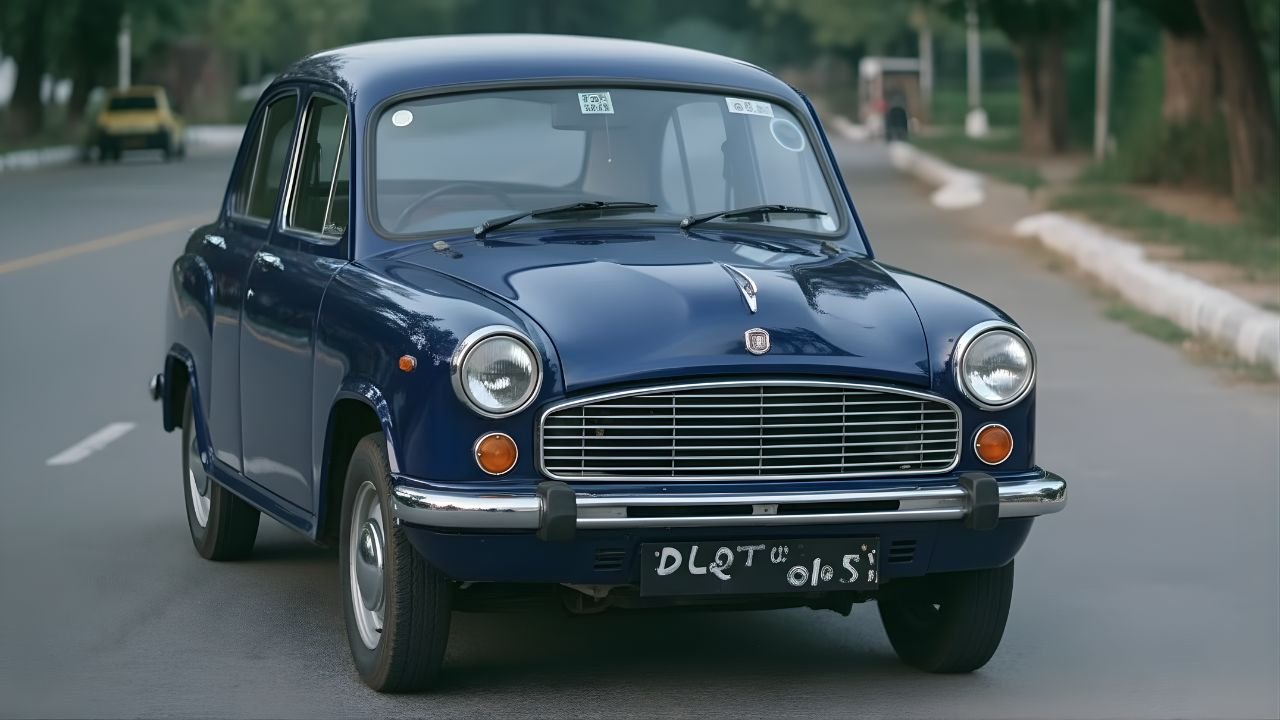
The 2026 Hindustan Ambassador is poised to make a historic comeback, transforming from the legendary “King of Indian Roads” into a modern electric sedan that blends nostalgic design with cutting-edge technology. After production ceased in 2014, the iconic Ambassador brand, now owned by Stellantis through its acquisition from Hindustan Motors in 2017, is reportedly being revived as an all-electric vehicle targeted for launch by March 2026.
With an expected price range of ₹10 lakh to ₹15 lakh, the new Hindustan Ambassador EV aims to compete in India’s growing electric vehicle segment while appealing to generations of Indians who hold fond memories of this automotive icon. The Ambassador was more than just a car—it was a cultural symbol that represented Indian pride, governmental authority, and family values for over five decades. Now, in its electric avatar, the 2026 Hindustan Ambassador promises to combine that rich heritage with sustainable mobility for a new generation of environmentally-conscious buyers.
2026 Hindustan Ambassador: A Legendary Revival
The original Hindustan Ambassador holds a special place in India’s automotive history that few vehicles can match. First introduced in 1957 and based on the British Morris Oxford Series III, the Ambassador quickly became synonymous with Indian identity. Hindustan Ambassador From government ministers and bureaucrats to taxi drivers and middle-class families, the Ambassador served millions of Indians with unwavering reliability and distinctive character.
For decades, spotting an Ambassador on Indian roads was as common as seeing chai stalls on street corners. The car earned its nickname “King of Indian Roads” through its robust construction, comfortable ride quality, and ability to handle India’s diverse and often challenging road conditions. The spacious cabin accommodated large families comfortably, while the sturdy body could withstand years of service with minimal maintenance.
However, changing market dynamics, increasing competition from international manufacturers, and the Hindustan Ambassador outdated technology led to declining sales throughout the 2000s. Hindustan Motors ultimately ceased production in 2014, marking the end of an era. Yet the emotional connection Indians felt toward the Ambassador never faded. The car continued appearing in Bollywood films, at vintage car rallies, and in the collective memory of a nation that grew up with this automotive icon.
In 2017, Peugeot-Citroën (now part of Stellantis) acquired the Ambassador brand name and rights from Hindustan Motors for approximately ₹80 crore, sparking speculation about a potential revival. Now, with India’s electric vehicle market expanding rapidly and government incentives supporting sustainable mobility, the timing appears right for the Ambassador to return—this time as a zero-emission electric sedan.
2026 Hindustan Ambassador Design and Exterior
The design philosophy of the 2026 Hindustan Ambassador reportedly strikes a careful balance between honoring the original model’s iconic appearance and incorporating modern automotive design elements. The goal is to create a vehicle that instantly evokes memories of the classic Ambassador while meeting contemporary expectations for style and aerodynamics.
Hindustan Ambassador most recognizable feature of the original Ambassador was its distinctive three-box silhouette with rounded edges, tall roof, and commanding presence. Reports suggest the 2026 model will retain this iconic shape while adding contemporary touches that enhance both aesthetics and functionality. The front fascia is expected to feature a retro-inspired grille that pays homage to the original design, now updated with modern LED lighting elements that provide improved visibility and a distinctive nighttime signature.
LED projector headlamps will replace the original round headlights while maintaining a similar visual character. The flowing fenders and curved bodywork that defined the Ambassador’s elegant profile are expected to be preserved, though refined with sharper character lines and improved aerodynamic efficiency. This attention to aerodynamics is particularly important for an electric vehicle, as reduced drag directly translates to improved driving range.
The rear design will likely feature LED taillights integrated into a modern interpretation of the original Ambassador’s distinctive tail section. A clean rear profile with subtle spoiler elements could aid aerodynamics while maintaining the classic sedan proportions. Two-tone color options may be available, allowing buyers to personalize their Ambassador with combinations that reference vintage color schemes or embrace more contemporary palettes.
Ground clearance is expected to be optimized for Indian road conditions, ensuring the 2026 Ambassador can handle speed breakers, unpaved surfaces, and varying terrain with the same confidence as its predecessor. Available wheel options may include both heritage-inspired designs and modern alloy patterns, giving buyers flexibility to choose the aesthetic that best represents their personal style.
2026 Hindustan Ambassador Electric Powertrain and Performance
The transformation of the Hindustan Ambassador from a fuel-guzzling petrol or diesel vehicle to a zero-emission electric sedan represents perhaps the most significant evolution in the model’s history. By adopting an electric powertrain, the 2026 Ambassador addresses one of the original model’s greatest weaknesses—poor fuel efficiency—while positioning the brand at the forefront of India’s sustainable mobility transition.
The 2026 Hindustan Ambassador EV is expected to feature a lithium-ion battery pack with capacity sufficient to deliver a driving range between 250 km and 350 km on a single charge, depending on variant and driving conditions. Some reports suggest higher-specification variants could achieve up to 500 km of range, though this remains to be confirmed. This range would make the Ambassador EV suitable for daily urban commuting as well as occasional intercity travel.
The electric motor is anticipated to produce competitive power output for the segment, enabling the Ambassador EV to deliver smooth, responsive acceleration characteristic of electric vehicles. Unlike internal combustion engines that require time to build power, electric motors deliver maximum torque instantly from zero RPM, providing brisk acceleration from standstill. This characteristic would transform the driving experience compared to the original Ambassador, which was never known for rapid acceleration.
Fast-charging capability is expected as a standard feature, allowing owners to replenish approximately 80% of battery capacity in 30-45 minutes using compatible DC fast chargers. Home charging through standard AC wall outlets would also be supported, enabling convenient overnight charging for daily commuters. The combination of adequate range and flexible charging options should address range anxiety concerns that sometimes discourage potential EV buyers.
Multiple driving modes are anticipated, including Eco, Comfort, and Sport settings that allow drivers to prioritize efficiency, balanced performance, or maximum responsiveness depending on their preferences and driving conditions. Regenerative braking technology would capture kinetic energy during deceleration and convert it back to electrical energy, extending range and reducing brake wear.
2026 Hindustan Ambassador Interior and Comfort Features
The original Ambassador was celebrated for its spacious, comfortable interior that made long journeys pleasurable experiences. The 2026 model is expected to preserve this legacy of comfort while incorporating modern amenities and materials that meet contemporary expectations.
Interior space has always been an Ambassador hallmark, and the 2026 model should continue this tradition with generous legroom, headroom, and shoulder room for all passengers. The cabin layout is expected to accommodate five adults comfortably, with particular attention paid to rear-seat passengers who can expect ample space to stretch out during extended journeys. Wide bench-style seating or individual bucket seats may be offered depending on variant.
The dashboard design is anticipated to blend retro-inspired aesthetics with modern functionality. Clean lines and soft-touch materials would create a premium atmosphere, while a central touchscreen infotainment system provides connectivity and entertainment features. The instrument cluster could feature a digital display showing speed, range, battery status, and other essential information at a glance, though heritage-inspired analog gauges might be offered as an alternative for buyers seeking authentic character.
Seating comfort has been a priority, with reports suggesting well-cushioned seats that provide excellent support for long-distance travel. The relaxed seating position and supportive backrests that made the original Ambassador a chauffeur-driven favorite could be retained and enhanced with modern ergonomic insights. Higher variants may offer features like adjustable lumbar support, ventilated seats, and power adjustment.
Climate control will ensure cabin comfort across India’s varied climate zones, from the extreme heat of summer to chilly winter conditions. Rear-seat AC vents would distribute conditioned air evenly throughout the cabin, ensuring all passengers remain comfortable regardless of their seating position.
Large windows have always been an Ambassador characteristic, providing excellent outward visibility and filling the cabin with natural light. The 2026 model is expected to maintain this openness while incorporating modern safety glass and UV protection to shield occupants from harsh sunlight.
2026 Hindustan Ambassador Technology and Connectivity
While the original Ambassador was decidedly analog in its technology offerings, the 2026 model is expected to embrace digital connectivity and smart features that modern buyers expect. The infotainment system will serve as the technological centerpiece of the cabin experience.
A touchscreen display is anticipated as the primary interface for entertainment, navigation, and vehicle settings. Screen sizes may vary by variant, with base models receiving a compact unit and higher trims featuring larger displays with enhanced graphics and functionality. The interface is expected to be intuitive and responsive, designed for ease of use even by buyers who are not particularly tech-savvy.
Smartphone connectivity through Apple CarPlay and Android Auto would allow seamless integration of mobile devices, enabling access to navigation apps, music streaming, messaging, and other smartphone functions through the vehicle’s display. Bluetooth connectivity would support hands-free calling and wireless audio streaming.
A modern audio system would provide clear, immersive sound quality for music and entertainment. Higher variants might offer premium audio systems with additional speakers strategically positioned throughout the cabin for optimal acoustic performance.
Navigation systems with real-time traffic information could help drivers find efficient routes and avoid congestion. Voice command functionality might be included, allowing drivers to control various functions without taking their hands off the steering wheel or eyes off the road.
Connected car features could enable remote vehicle monitoring and control through a smartphone application. Functions like remote climate pre-conditioning, charging status monitoring, vehicle location tracking, and remote lock/unlock could enhance convenience and security for owners.
Digital instrument clusters would display essential driving information in clear, easily readable formats. Customizable display modes might allow drivers to choose the information they find most relevant, whether focusing on range and efficiency data or more traditional speedometer and odometer readings.
2026 Hindustan Ambassador Safety Features
Safety technology has advanced dramatically since the original Ambassador’s design era, and the 2026 model is expected to incorporate modern safety systems that meet contemporary standards and regulations.
Structural safety forms the foundation of occupant protection, and the new Ambassador is expected to feature a reinforced body structure designed to absorb and distribute crash forces effectively. High-strength steel and strategically placed crumple zones would help protect the passenger compartment during collisions.
Multiple airbags are anticipated as standard equipment, including dual front airbags for driver and front passenger protection. Higher variants may add side airbags and curtain airbags for enhanced protection in side-impact and rollover scenarios.
Anti-lock Braking System (ABS) with Electronic Brake-force Distribution (EBD) would prevent wheel lockup during emergency braking while optimizing brake force distribution between front and rear wheels. This combination enhances braking stability and control, particularly on slippery surfaces.
Electronic Stability Control (ESC) would monitor vehicle dynamics and automatically intervene if it detects loss of traction or directional instability, helping drivers maintain control during emergency maneuvers or challenging road conditions.
Advanced Driver Assistance Systems (ADAS) features may be available on higher variants, potentially including lane departure warning, automatic emergency braking, parking sensors, rearview camera, and blind spot monitoring. These technologies provide additional layers of safety by alerting drivers to potential hazards and, in some cases, intervening automatically to prevent accidents.
A 360-degree camera system could aid parking and low-speed maneuvering by providing a bird’s-eye view of the vehicle’s surroundings, helping drivers avoid obstacles and navigate tight spaces with confidence.
2026 Hindustan Ambassador Expected Variants and Pricing
The 2026 Hindustan Ambassador is expected to launch with multiple variants catering to different buyer segments, from practical entry-level options to fully-loaded premium configurations.
| Variant | Expected Price | Key Features |
|---|---|---|
| Base | ₹10-11 Lakh | Electric powertrain, basic infotainment, essential safety features |
| Mid | ₹12-13 Lakh | Larger touchscreen, enhanced connectivity, additional airbags |
| Top | ₹14-15 Lakh | Premium audio, full ADAS suite, connected car features, leather upholstery |
The base variant would offer the core Ambassador experience with electric powertrain, essential safety equipment, and basic comfort features at an accessible price point. This variant would likely appeal to fleet operators, government agencies, and budget-conscious individual buyers seeking the Ambassador experience without premium pricing.
Mid-range variants would add enhanced technology features including larger infotainment displays, improved audio systems, and additional convenience features. This configuration would target buyers seeking a balance between value and features.
Top-specification variants would offer the complete Ambassador experience with all available technology, safety, and comfort features. Premium materials, advanced driver assistance systems, and connected car functionality would justify the higher pricing while delivering a luxury ownership experience.
Government EV subsidies under FAME II and state-level incentive programs could further reduce the effective purchase price for eligible buyers, making the Ambassador EV even more accessible.
2026 Hindustan Ambassador vs Competitors
The 2026 Hindustan Ambassador EV will enter a competitive electric vehicle market where established players have already gained significant mindshare. Understanding how the Ambassador compares to key rivals helps potential buyers make informed decisions.
| Specification | Ambassador EV | Tata Tigor EV | Citroen eC3 | Tata Xpres-T EV |
|---|---|---|---|---|
| Expected Price | ₹10-15 Lakh | ₹12-13 Lakh | ₹11-12 Lakh | ₹10-12 Lakh |
| Body Style | Sedan | Sedan | Hatchback | Sedan |
| Expected Range | 250-350 km | 315 km | 320 km | 255 km |
| USP | Heritage + Modern | Established Brand | European Design | Fleet Focus |
| Target Buyer | Nostalgic + Eco-conscious | Mainstream EV | Urban Commuter | Commercial + Personal |
The Tata Tigor EV represents the most direct competitor, offering a proven electric sedan platform with established service network and charging infrastructure support. However, the Tigor lacks the emotional connection and brand heritage that the Ambassador brings, which could be decisive for buyers seeking more than just practical transportation.
The Citroen eC3 competes on price and offers attractive European styling with decent range, but its hatchback body style and compact dimensions may not appeal to buyers seeking the spaciousness and presence that defined the Ambassador character.
The Tata Xpres-T EV targets both fleet and personal buyers with practical efficiency, though again lacks the distinctive character and heritage appeal of the Ambassador.
The Ambassador’s key differentiator lies in its unique combination of emotional heritage value and modern electric technology—a formula no competitor can replicate. For buyers who value distinctiveness and cultural significance alongside practical transportation, the Ambassador offers something genuinely unique in the market.
Manufacturing and Launch Timeline
Reports indicate that manufacturing of the new Ambassador EV is planned to take place at Hindustan Motors’ Chennai facility, potentially creating new employment opportunities and contributing to India’s automotive manufacturing ecosystem. This domestic production aligns with the “Make in India” initiative and would help position the Ambassador as a symbol of Indian manufacturing capability in the EV era.
Development is reportedly in advanced stages, with Stellantis leveraging its global electric vehicle expertise and Citroen’s technology platforms to create a competitive product. The company’s experience developing electric vehicles for various global markets provides a foundation of knowledge and proven componentry that could accelerate the Ambassador’s development timeline.
The targeted launch window of March 2026 would coincide with the government’s continued push for electric vehicle adoption and the expansion of charging infrastructure across India. By this timeline, the charging ecosystem should be more mature, addressing one of the key concerns potential EV buyers currently face.
However, it should be noted that while numerous reports discuss the Ambassador revival, official confirmation from Stellantis or Hindustan Motors remains limited. Potential buyers should monitor official announcements for confirmed specifications, pricing, and availability dates.
Should You Wait for the 2026 Hindustan Ambassador?
The 2026 Hindustan Ambassador represents a unique proposition in the Indian automotive market—the revival of a cultural icon reimagined for the electric age. For buyers considering this vehicle, several factors deserve consideration.
Those with emotional connections to the Ambassador brand may find the new model irresistible regardless of objective comparisons with competitors. The opportunity to own a piece of Indian automotive history, updated with modern technology and zero-emission powertrain, carries intangible value that transcends typical purchase criteria.
Practical considerations also favor the Ambassador EV. The expected price positioning makes electric mobility accessible without requiring luxury-car budgets. The spacious cabin continues the Ambassador tradition of comfortable family transportation. Modern safety and technology features address contemporary expectations while respecting heritage aesthetics.
However, buyers seeking immediate gratification may prefer established alternatives like the Tata Tigor EV, which offers proven reliability, extensive service networks, and immediate availability. The Ambassador’s emotional appeal must be weighed against the practical benefits of purchasing a vehicle with established track record and support infrastructure.
For those who can wait, the 2026 Hindustan Ambassador promises something genuinely special—a vehicle that connects India’s automotive past with its sustainable future while delivering practical daily transportation. The Ambassador wasn’t just a car; it was part of Indian identity. In its electric reincarnation, it has the potential to represent that identity once again for a new generation.
2026 Hindustan Ambassador: Frequently Asked Questions (FAQs)
Q1: What is the expected price of the 2026 Hindustan Ambassador?
The 2026 Hindustan Ambassador is expected to be priced between ₹10 lakh and ₹15 lakh (ex-showroom), depending on variant and features. This pricing would position it competitively against other electric sedans like Tata Tigor EV and Citroen eC3 while making electric mobility accessible to a broader range of buyers. Government EV subsidies may further reduce the effective purchase price for eligible customers.
Q2: When will the 2026 Hindustan Ambassador launch in India?
According to various reports, the 2026 Hindustan Ambassador EV is targeted for launch around March 2026, though some sources suggest September 2026. The exact launch date may depend on development progress, regulatory approvals, and market conditions. Potential buyers should monitor official announcements from Hindustan Motors and Stellantis for confirmed launch dates.
Q3: What is the expected range of the Hindustan Ambassador EV?
The 2026 Hindustan Ambassador EV is expected to offer a driving range between 250 km and 350 km on a single charge, making it suitable for daily urban commuting and occasional intercity travel. Some reports suggest higher-specification variants could achieve greater range. Fast-charging capability is anticipated, allowing 80% charge in approximately 30-45 minutes.
Q4: Who owns the Hindustan Ambassador brand now?
The Ambassador brand is currently owned by Stellantis, the global automotive group that includes Peugeot and Citroen. Stellantis acquired the brand name and rights from Hindustan Motors in 2017 for approximately ₹80 crore. The revival is reportedly being developed in collaboration with Citroen’s technology and expertise.
Q5: Will the 2026 Ambassador retain its classic design?
Yes, the 2026 Hindustan Ambassador is expected to retain its iconic silhouette and design elements that made the original instantly recognizable. However, modern touches including LED lighting, refined aerodynamics, and contemporary interior materials will update the design for current expectations while preserving heritage character.
Q6: What are the main competitors of the 2026 Hindustan Ambassador EV?
The primary competitors include Tata Tigor EV, Tata Xpres-T EV, and Citroen eC3 in the electric vehicle segment. In terms of brand heritage and emotional appeal, the Ambassador occupies a unique position with no direct competitors—it is the only Indian automotive icon being revived as an electric vehicle.
Disclaimer: The information in this article is based on reports, speculation, and expected features. Official specifications, pricing, and launch dates may vary. Readers are advised to verify all details with authorized sources before making purchase decisions. As of the publication date, Stellantis has not officially confirmed all details of the Ambassador revival.
